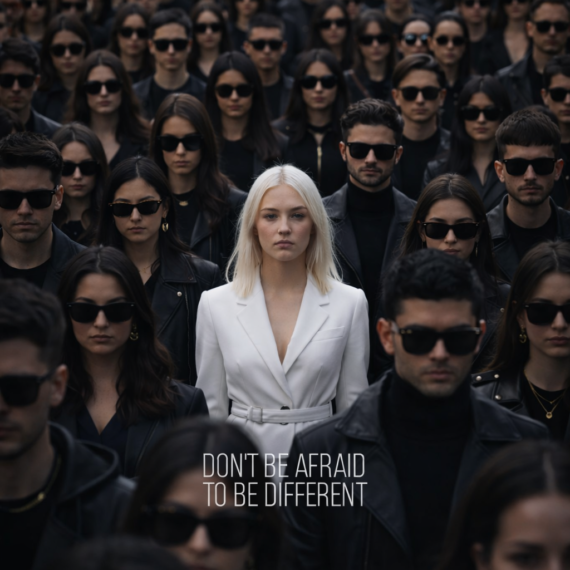


Some women learn early that clothing is more than fabric. It becomes a kind of language. A way to enter rooms without asking permission. A shield. A signature. Sometimes, a quiet plea to be seen. I know this language well. I speak it fluently. I built my life around it.
As a fashion designer I get to live among textiles, silhouettes, measurements, decisions that seem small but shape how a body feels in the world. I believe deeply in beauty. I believe in intention. I believe that what we wear can hold memory, culture, and emotion.

And yet, the most important truth I have learned about fashion did not come from the industry.
It came from the words of Jesus:
“Is not life more than food, and the body more than clothing?”
He did not say this to diminish beauty. He said it to rescue it.
Modern life teaches us to curate ourselves carefully. We adjust, refine, edit. We learn what works on camera. What commands attention. What hides what feels vulnerable. Over time, clothing quietly becomes responsible for more than expression. It begins to carry our sense of safety. Our belonging. Our worth.

When that happens, fashion becomes heavy.
It stops being a language and turns into a verdict.
I have felt this tension in my own body. The moment before walking into a space where I wanted to be taken seriously. The instinct to choose something not only beautiful, but strategic. Protective. Convincing. Many women understand this without needing it explained.
But Jesus never spoke to women as problems to be solved or images to be perfected. He spoke to them as whole. Already seen. Already known.
His words suggest a different order: the body has dignity before it has decoration. Existence carries meaning before it is styled. Value is not assembled. It is given.
You were valuable before fabric ever touched your skin.
This truth changed the way I design.

I no longer approach garments as instruments of correction. I do not believe clothes should negotiate our place in the world or repair something broken inside us. When worth is settled, fashion becomes lighter. Freer. Honest.
Design becomes conversation, not compensation.
I notice it in women when they dress from this place. Their posture shifts. Their choices simplify. They stop dressing to disappear or to perform. They begin dressing to align.
The question becomes quieter:
Not How will I be perceived?
But Who am I today?
This does not make fashion less powerful. It makes it more precise.
Beauty without anxiety.
Style without apology.
Elegance without fear.

Of course, some days the mirrors still speak loudly. Culture still measures. Comparison still visits. On those days, grace matters more than discipline. Jesus never rushed people into wholeness. He walked with them. He knew their rhythms, their contradictions, their wounds. He knows ours.
Fashion will always shape culture. It will always move desire, memory, imagination. But it was never meant to define the soul.
When worth is no longer in question, clothing returns to what it was always meant to be:
a form of poetry worn on the body.
Not identity.
But expression.