
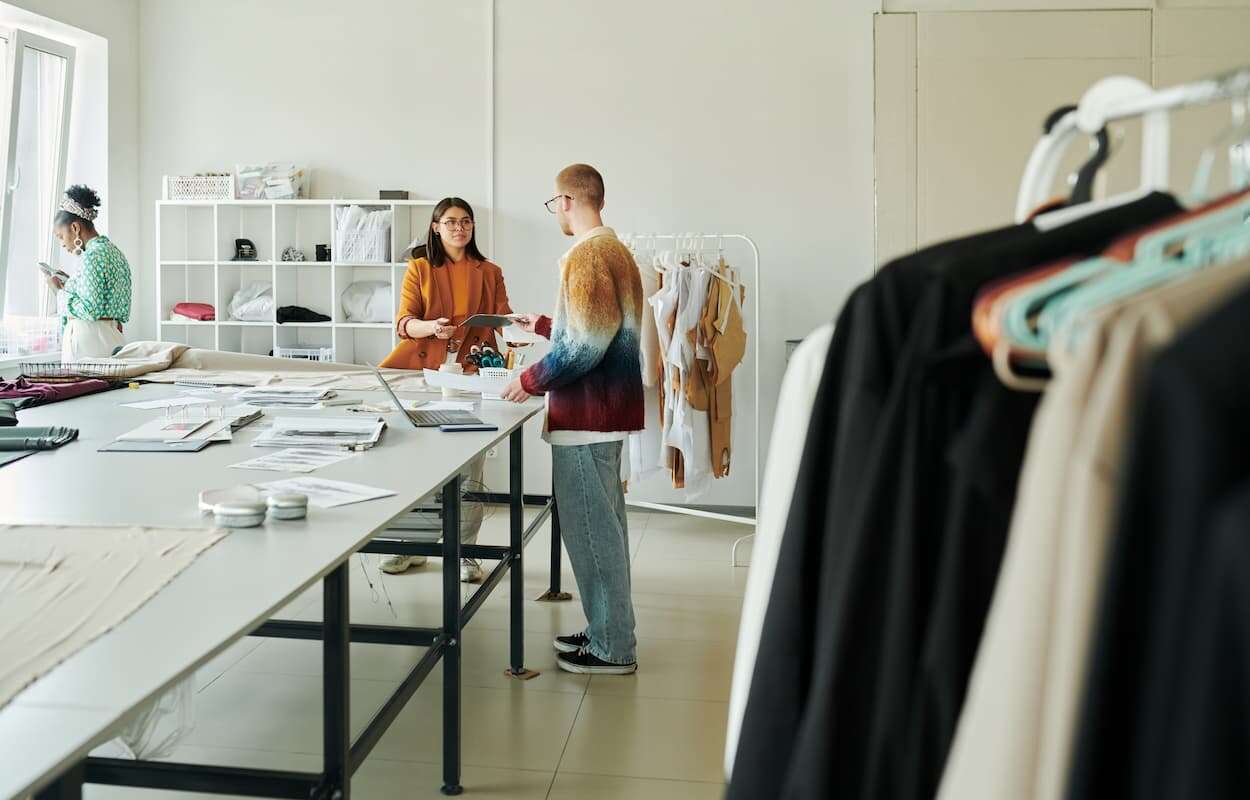
Fashion has long celebrated the myth of the lone genius—the visionary designer sketching in solitude, commanding ateliers with a single voice. That era is ending. Today, the most powerful ideas in fashion are no longer born in isolation. They’re built in collectives—groups where stylists, technologists, and makers shape ideas together until the boundaries of authorship blur. What used to be competition is becoming composition.
You can see this shift across every corner of the industry. The most interesting projects in American fashion aren’t coming from major houses but from cross-disciplinary studios and online networks where roles are fluid. In Chicago, The Radial Group merges fashion design with architecture, crafting garments that adapt to motion using engineering principles. In Los Angeles, Public School’s creative offshoot collaborates with environmental scientists to develop bio-based fabrics. What connects these teams isn’t hierarchy—it’s shared purpose. The signature isn’t one person’s name anymore; it’s the collaboration itself.
Technology has accelerated this transformation. Digital platforms have turned collaboration from logistical headache into creative playground. A stylist in Brooklyn can work with a coder in Seoul and a photographer in Lagos in real time. Tools like CLO3D and Unreal Engine allow entire collections to be built collaboratively in virtual space before a single garment is cut. The process has become less about control and more about connection. In fashion’s new economy, cooperation is the currency.
This model also challenges the idea of ownership. The old system rewarded individual genius because it was easier to package. But as creativity becomes more collective, credit has to evolve. We’re seeing early signs of that in projects like Maison Meta’s AI collaborations, where designers list both human and algorithm as co-authors. It’s a radical transparency that forces you to rethink what authorship even means. When a garment’s creation involves hundreds of inputs—from material engineers to digital artists—the question isn’t “who made this?” but “what made this possible?”
Collaboration isn’t just changing how fashion is produced; it’s changing who participates. For decades, gatekeepers decided who belonged in the conversation. Now, access has widened. Independent stylists are working directly with visual artists and musicians to shape microcultures that rival traditional houses in influence. These collaborations often start small—a shared photoshoot, a capsule collection—and evolve into ecosystems. When creativity becomes shared property, it scales faster and sustains longer.

The economic logic supports this shift. According to McKinsey’s 2024 State of Fashion report, brands engaging in cross-industry partnerships see an average 22% higher growth rate in audience reach and a 35% increase in brand loyalty compared to those working solo. Consumers are drawn to collaboration because it mirrors their own hybrid identities. The culture of influence has moved from personality-driven to community-driven. People don’t just want to buy from brands; they want to belong to creative worlds.
At its core, collaboration also offers protection against burnout—a condition that has plagued the industry’s brightest minds. When the weight of innovation doesn’t rest on one person, creativity can breathe again. The emotional sustainability of collective work is often overlooked, but it’s what allows ideas to evolve organically instead of collapsing under pressure. Sharing authorship means sharing energy, risk, and reward. The result is fashion that feels alive because it was built through conversation, not command.
This doesn’t mean individuality disappears. It means ego becomes integrated into something larger. The best collectives allow space for personal voice while grounding it in shared vision. That’s why the most enduring creative movements—Bauhaus, Antwerp Six, or even early Vetements—thrived not because of one figurehead but because each member pushed the others further. The future of fashion isn’t about replacing individuality; it’s about amplifying it through collaboration.

For you as a creator, the takeaway is simple but powerful: collaboration isn’t a compromise—it’s an amplifier. The more you invite others into your process, the more expansive your work becomes. Reach outside your discipline. Partner with a musician, a coder, a writer. Let friction become fuel. Fashion’s next icons won’t be solo designers but collectives whose chemistry outshines competition.
The shift toward collaborative creation marks a quiet revolution in how fashion defines genius. The industry’s next great movement won’t come from a single atelier or a signature monogram—it will come from shared imagination. Collaboration is no longer an accessory to creativity; it is creativity. And in a culture obsessed with individuality, that might be the boldest design statement of all.